
Are you ready to buy a rental property but scared of making a bad deal?
It’s in our nature to seek out a good deal.
Think about it: we’re hardwired to hunt for coupons, scour the internet for promo codes, and rush to stores during big sales. Just look at Black Friday—people line up for hours to snag the best prices on electronics, toys, and holiday gifts.
But here’s the kicker: there’s nothing quite like that sinking feeling when you walk into a store or open an email to find that the item you just bought is now on sale for less. You think, “I thought I scored a great deal, but now it’s even cheaper!” It’s enough to make anyone cringe.
For many of us, the fear of missing out on an even better deal can be pretty daunting. And while this post isn’t about Black Friday or shopping in general, that same mindset carries over into the world of rental property investing.
In fact, this could be why you haven’t taken the plunge into property ownership yet. You might be waiting for that “great deal” to land in your lap, feeling like you haven’t found it yet. Or maybe you’re just terrified of making a bad investment and losing money.
Many rookie investors grapple with one or both of these feelings. As a result, the search for that ideal property—and the financial independence it promises—can come to a grinding halt.
But here’s the thing: waiting for perfection can keep you stuck. Instead of letting the fear of missing out paralyze you, consider that sometimes the best deals are the ones you create for yourself through knowledge, research, and decisive action.
Here are three truths that should put to rest these fears that keep popping up and keep you moving toward that dream of financial freedom.
Truth #1
Getting a ‘good deal’ on a rental property is actually pretty simple.
Truth #2
The idea of getting a ‘good deal’ is truly arbitrary.
What seems like a great opportunity to one person may not resonate with another. It all depends on the investing goals you establish at the outset of your journey.
Let’s break down the concept of getting a good deal and show you how simple it can actually be.
Setting Goals as an Investor
Before you embark on the sometimes turbulent path of real estate investing, take the time to clarify your goals.
I use to share this same example with my students (I was an English teacher) when I was teaching them how to write an essay that was congruent and contained flow.
Not that long ago smart phones didn’t exist. And if we wanted to go somewhere we couldn’t just get in the car and go and plug an address in on the way. If we left our homes without printing out directions from MapQuest, we most assuredly would get lost. It would take us much longer to get to our destination and we would get frustrated, mad and maybe even want to turn around and go home before we ever got where we were going.
If you haven’t seen the connection to real estate investing….let me share it with you….
If you start down this investing path without taking time to sit back and decide what type of investor you want to be…
You will most certainly get lost along the way. Just like many of us used to when we forgot to print out directions from MapQuest.
You will get mad.
You will get overwhelmed.
You will get lost.
And you’ll want to quit.
So before you jump in the car without directions…take some time to sit down and ask yourself some of these questions.
- What type of property do I want to invest in? (single family homes, condos, student rentals, etc.)
- What kind of return on investment (ROI) am I looking to earn on my investment?
- What is the quality of the properties that I’m planning to build my portfolio with?
- Do I want to self-manage the properties or hire property management?
These questions will provide direction and focus, helping you avoid a frustrating, aimless search for properties.
Finding a Property
Once you’ve determined the type of investor you are, what kinds of properties you want to invest in and what type of return (ROI) you’re looking to earn finding a property becomes a bit easier.
With setting these parameters for yourself as an investor, you have a focus when it comes to looking for property.
So you don’t waste your time.
It’s just a matter of putting the time and effort into looking online, driving around your neighborhood and letting your real estate agent know what you want to get the ball rolling.
(While I could spend forever on this topic of finding properties, I want to get to the main focus of this article….analyzing properties. If you’re looking for more on finding properties click here.)
Running the Numbers
This is where many novice investors start to feel anxious. After setting goals and identifying a seemingly good property, the pressure mounts when it comes to running the numbers. This is often where fear of failure can derail potential investors.
But here’s the good news: if you know the right numbers to look for and have a reliable spreadsheet or calculator, you can eliminate that fear.
When I first started, I didn’t even understand what ROI (return on investment) meant, and yes, I was nervous. However, I learned to appreciate the logical nature of analyzing potential deals. It’s straightforward—black and white.
As an investor, it’s crucial to detach your emotions from the process. The numbers will guide your decisions, not your feelings about the property. If you can make that mental shift, you’ll position yourself for greater financial success.
Truth #3:
When you analyze a potential deal, it shouldn’t feel like a guessing game. You should know whether the property will generate profit or not.
A successful analysis is calculated and strategic. Always factor in contingencies for unexpected expenses. If the numbers don’t work at the outset, don’t assume they’ll improve down the line—walk away.
Before diving into specific examples of analyzing deals, let’s outline the critical numbers you need to gather:
- Purchase price
- Taxes
- Insurance
- Interest rate
- Closing costs
- Vacancy rate
- HOA/Condo fees
- Utilities
- Lawn care/Snow removal
- Property management
- Initial rehab costs
- Capital expenditures
- Gross monthly rental income
These figures are vital to your analysis. Omitting any of them can lead to costly mistakes.
As an investor, you want to be as thorough as possible when it comes to gathering numerical information about a potential property.
Because think about it….it’s your money you’re putting into it.
Your money…your risk.
Remember, it’s your money on the line, so do your due diligence.
In the world of rental property investing, clarity and confidence are your greatest allies. By setting clear goals, understanding what constitutes a good deal, and diligently analyzing potential properties, you can navigate the market with purpose.
Remember, every seasoned investor started where you are now, and the key to success lies in taking that first step—armed with knowledge and a solid strategy.
So, don’t let fear hold you back. Embrace the journey, trust the numbers, and soon you’ll find yourself well on your way to achieving your financial independence through real estate.
Happy Investing!
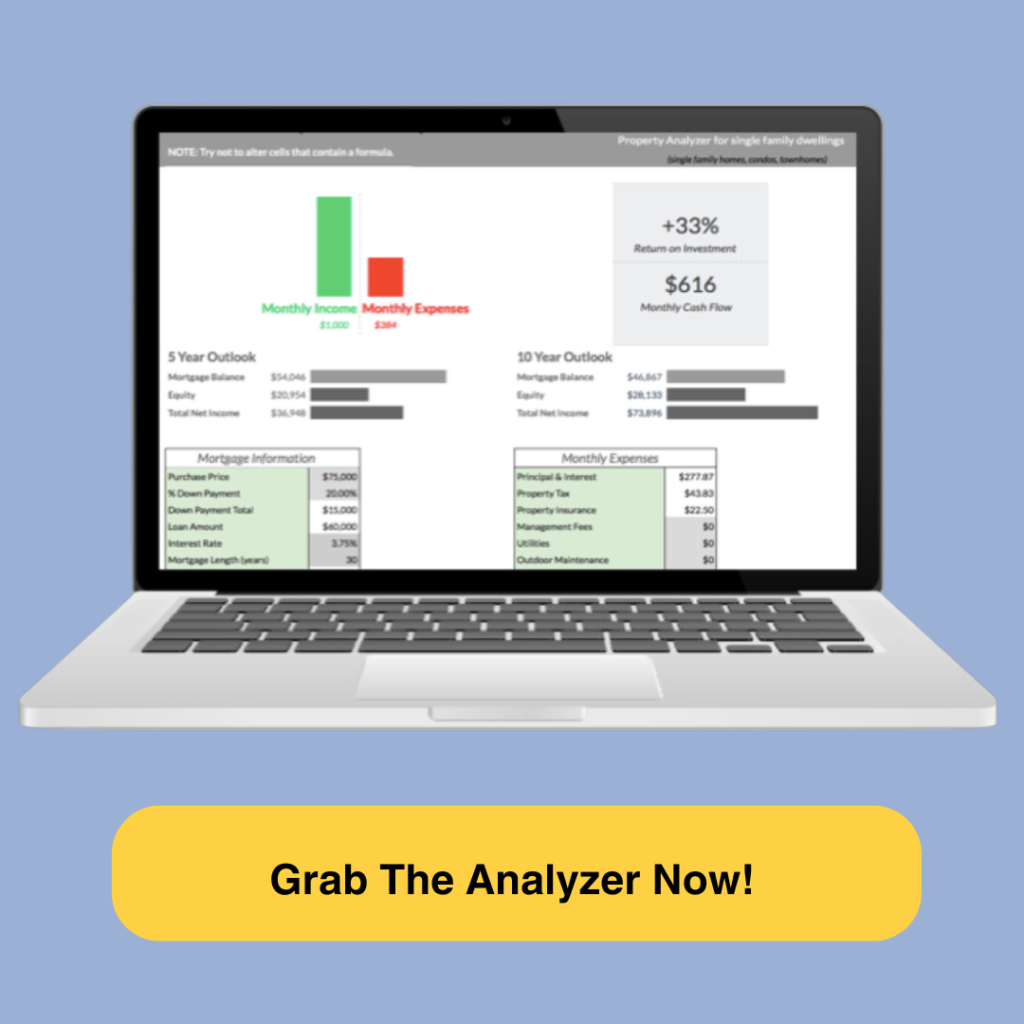
Confidently determine cash flow on potential rental property.
The Property Analyzer is the one tool that you need as an investor to help you succeed. Take the guess work out of whether or not a property will meet you return on investment goals.